What happened
Flaky tests are tests that pass and fail without a meaningful code change. One run is green. The next run is red. The product may be fine, but the signal is no longer trustworthy.
At small scale, a flaky test feels like a nuisance. Someone reruns CI, waits for the pipeline, and moves on. At Reddit and Uber scale, that habit becomes expensive. Every unreliable test consumes build minutes, interrupts engineers, slows reviews, and teaches teams to distrust their own automation.
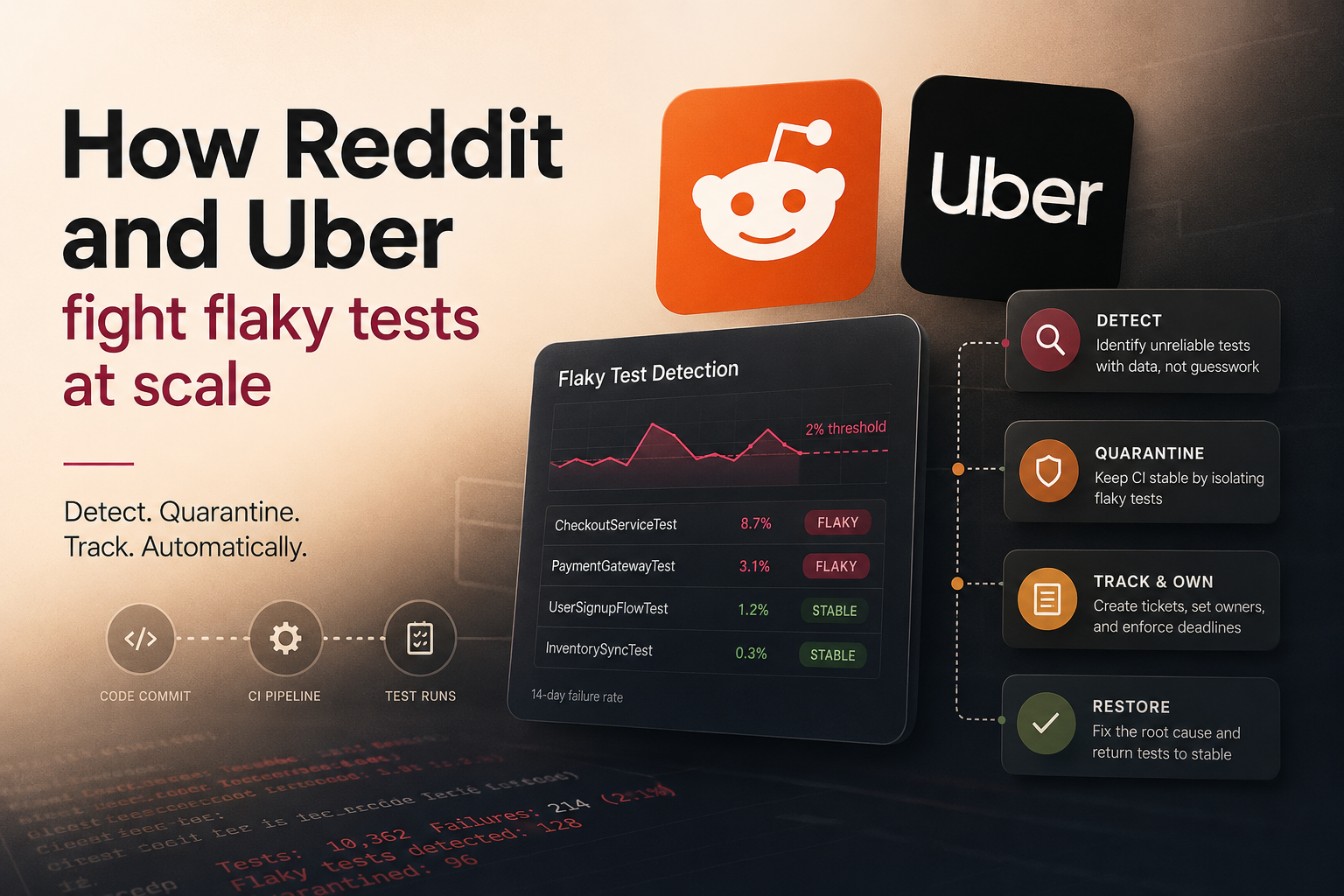
Reddit and Uber both reached the same practical conclusion: flaky tests cannot be managed by memory, Slack threads, or heroic cleanup days. They need to be detected, labelled, quarantined, and tracked as part of the engineering system itself.
The damage
The cost of flaky tests is rarely one dramatic outage. It is the slow operational tax they place on every team that ships through CI.
Engineers lose time rerunning pipelines. Pull requests wait behind failures nobody trusts. Real regressions become harder to notice because the test suite already has a reputation for noise. Eventually, teams start treating red builds as suggestions instead of evidence.
That is the dangerous part. A flaky suite does not only waste time. It weakens the release culture around it. Once people believe the tests might be lying, the entire delivery process becomes easier to bypass.
How QA would have prevented this
A mature QA process treats test reliability as part of product reliability. If the test suite is noisy, the release signal is noisy too.
The first prevention step is measurement. Track which tests fail, how often they fail, where they fail, and whether they pass on retry. Flakiness needs a record, not a hunch.
The second step is quarantine. Unreliable tests should not be allowed to block every release forever, but they also should not disappear. Quarantine keeps the pipeline moving while preserving ownership and visibility.
The third step is root-cause discipline. Retries can reduce friction, but they can also hide broken assumptions: timing dependencies, shared state, test-order coupling, network assumptions, missing cleanup, or environments that do not match production closely enough.
Reddit and Uber show the same lesson in different forms. At scale, reliability work has to become system work. The goal is not to make every engineer remember which tests are suspicious. The goal is to build a release process that makes unreliable signals obvious, contained, and fixable.
Your product may not run tens of thousands of tests per change, but the pattern still applies. If your QA signal is noisy, your shipping decisions get noisier too.